

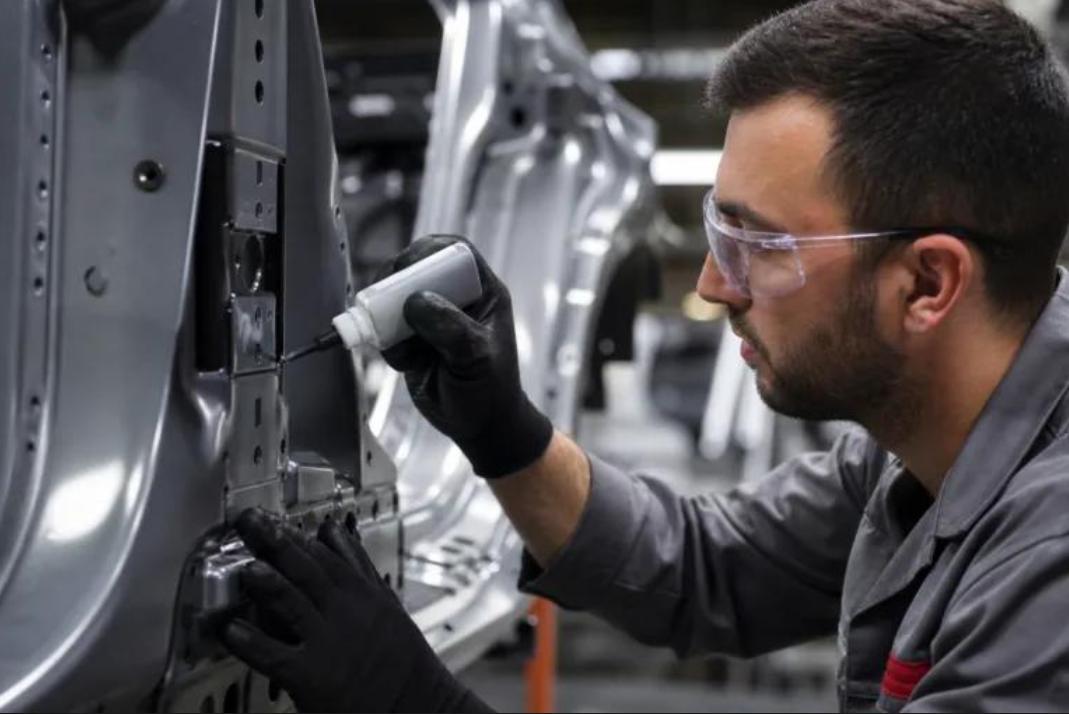
Industrial adhesives, commonly known as industrial glue, are specialized bonding materials designed to join similar or dissimilar materials in industrial production and engineering fields. Unlike ordinary household glues that focus on simple daily bonding, industrial adhesives are engineered to deliver high strength, superior durability, and stable performance under extreme working conditions. They have gradually replaced traditional connection methods such as riveting, welding, and screwing, becoming an indispensable core material in modern manufacturing, automotive, electronics, construction, and aerospace industries. With the continuous upgrading of industrial technology, industrial adhesives are evolving toward high efficiency, environmental protection, intelligence, and multi-functionality, driving the innovation of industrial assembly processes.
There are diverse types of industrial adhesives, each with unique curing mechanisms, performance characteristics, and applicable scenarios, meeting the differentiated needs of complex industrial production. Epoxy adhesives, as one of the most widely used structural adhesives, are two-component systems composed of resin and hardener. They cure through chemical cross-linking reactions, featuring ultra-high bonding strength, excellent chemical resistance, and strong adhesion to metals, plastics, ceramics, and composite materials. Due to their stable physical and chemical properties, epoxy adhesives are widely used in structural fixing, equipment reinforcement, and anti-corrosion sealing in machinery manufacturing and construction engineering.
Cyanoacrylate adhesives, also called instant super glues, are famous for their ultra-fast curing speed. They can complete bonding within seconds at room temperature, making them ideal for precise assembly of small and micro parts in electronic appliances, precision instruments, and plastic products. However, their application is limited by poor resistance to high temperature and humidity, so they are mostly used for light-load bonding scenarios. In contrast, anaerobic adhesives cure only in oxygen-free environments, which makes them perfect for thread locking, bearing fixing, and gap sealing of metal parts. They effectively prevent loosening and leakage of mechanical components, greatly improving the stability and service life of mechanical equipment.
Silicone and polyurethane adhesives are two other mainstream industrial glue types with distinctive advantages. Silicone adhesives excel in high and low temperature resistance, weather resistance, and flexibility, maintaining stable performance in the temperature range of -60°C to 200°C. They are mainly used for sealing, waterproofing, and shock absorption in automotive gaskets, electronic component packaging, and building doors and windows. Polyurethane adhesives have outstanding elasticity, impact resistance, and compatibility with both porous and non-porous materials. They can bond wood, foam, metal, and stone, and are widely applied in outdoor engineering, furniture manufacturing, and new energy equipment assembly due to their non-toxicity and long-term aging resistance.
The popularity of industrial adhesives in modern industries stems from their unique advantages over traditional connection technologies. First, adhesive bonding can realize uniform stress distribution on the joint surface, avoiding local stress concentration caused by welding and punching, thus improving the overall structural stability of products. Second, industrial glue bonding does not damage the surface of materials, realizing invisible and smooth connection, which greatly optimizes product appearance and is especially suitable for high-precision and high-aesthetic products. Third, adhesive bonding helps reduce product weight. Compared with metal fasteners and welding structures, thin glue lines effectively lower the overall weight of equipment, which is of great significance for energy conservation and emission reduction in automobiles, aircraft, and new energy vehicles.
In addition, industrial adhesive bonding simplifies production processes and improves manufacturing efficiency. It adapts to automated assembly line operations, reduces manual operation steps and processing costs, and shortens production cycles. Meanwhile, modern industrial adhesives have made remarkable progress in environmental protection. Most new products adopt low-VOC, non-toxic, and pollution-free formulas, which comply with international environmental protection standards and solve the environmental pollution problems caused by traditional chemical bonding materials.
At present, the global industrial adhesive industry is developing rapidly with the booming of emerging industries such as new energy, electronic information, and intelligent manufacturing. The market puts forward higher requirements for adhesive performance, including high temperature resistance, low temperature curing, high precision, and long service life. In the future, with the continuous innovation of polymer material technology, intelligent adhesives with self-repairing, temperature sensing, and corrosion warning functions will become the mainstream development direction. Moreover, green and biodegradable industrial adhesives will gradually replace traditional high-pollution products, promoting the sustainable and high-quality development of the global manufacturing industry.